
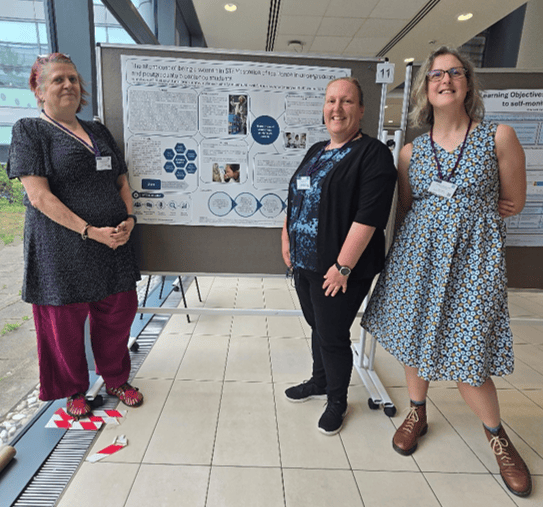
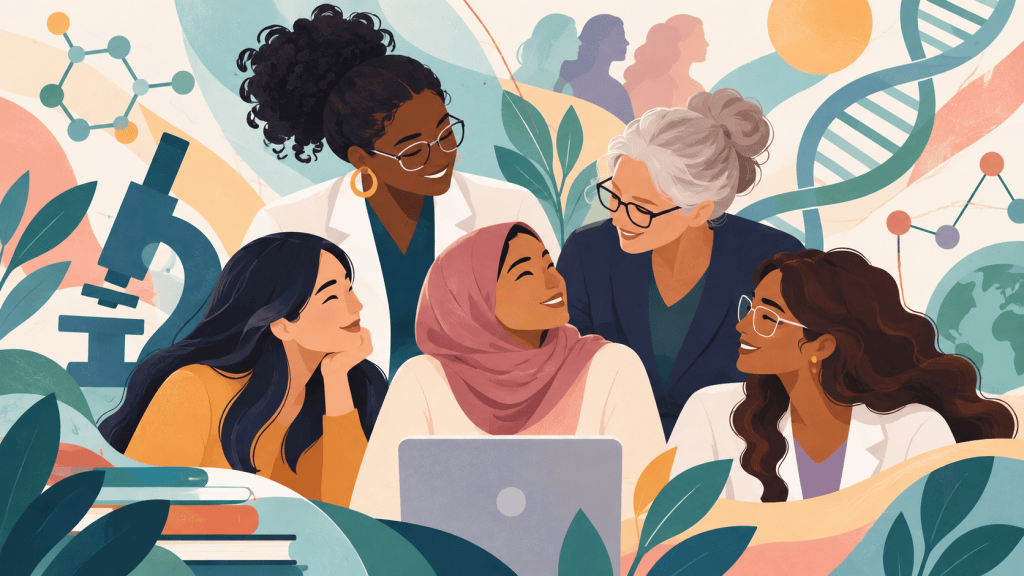
Before writing this post, we thought long and hard about what to say. At first, we asked ourselves whether the messages we were trying to articulate would be dismissed as being “overly dramatic” or us being “too sensitive”. But as our collaborative women in STEM project has progressed, and we have continued to collect data by interviewing students and staff, we have come to recognise the importance of talking about these shared experiences. The very act of hesitation, born from decades of persistence in an environment where women often feel they need to have more knowledge and authority to be taken seriously, speaks volumes about the challenges of positioning yourself in the space you deserve to occupy as a woman in STEM. These challenges are already evident to our students with one participant saying “I’ve always found you kind of, you almost have to know more than them <male peers> because you’re the first one … getting challenged”. What originally started as undergraduate capstone projects across NTU, Sheffield Hallam University and University of Liverpool has rapidly gained momentum in the face of their collective lived experiences.
Indeed, based on recent dissemination of this work, the messages coming out of this research clearly resonate with women from many different nationalities and cultures. A question that perhaps everyone should be asking is whether the experience of students in this generation is really so different from that of our own generation (whichever generation that may be!). Whilst student participants in our study have noted changes in representation of women in STEM during their lifetime and frequently cited strong role models in their personal networks or earlier education, their progression frequently speaks of the resilience needed to persist in environments where their voices are diminished in comparison to their male counterparts.
The silencing of female voices and the micro-aggressions they encounter are something we should all be concerned about. After all, is this the type of treatment we would want our mother, sister, partner, or female friend to experience? Would we be comfortable with them being talked over or their arguments being dismissed in a professional setting? We would like to think that the answer would be no, and yet these behaviours persist.
Despite the prevalence of these experiences amongst our participants, a common strand emerged suggesting that university was a pivotal point where they gained a greater sense of belonging and developed greater confidence in their position within STEM. Preliminary data from staff shows a similar trend, with life-long friendships and professional relationships stemming from university and into the early stages of their careers.
As academics, the example that we set is important because it shows our students what is possible and what they can expect. For example, proving that it isn’t necessary to sacrifice having a family to have a successful career in STEM removes an important barrier for students who want to be (or are already) parents. Not only this, but we hold potential as role models for students who describe how “I used to love science… but there wasn’t really anyone that looked like me growing up”. The importance of this was recognised by another participant who commented “it makes people go, ‘yeah, you’re really amazing and I want to be like you’. And I think that’s what we need as women in science”.
So what can we as university academics do to make a difference for our students, our colleagues and our communities? If this piece has resonated with you, then be the mentors and role models that inspire our students, lift your colleagues up and show future generations of women scientists that they belong and that anything is possible. So, our question to you is, what one thing will you do to make this happen?

Melissa Lacey
Associate Professor in the School of Bioscience and Chemistry
Sheffield Hallam University


 Bioscience Scholarship Research at NTU
Leave a comment