
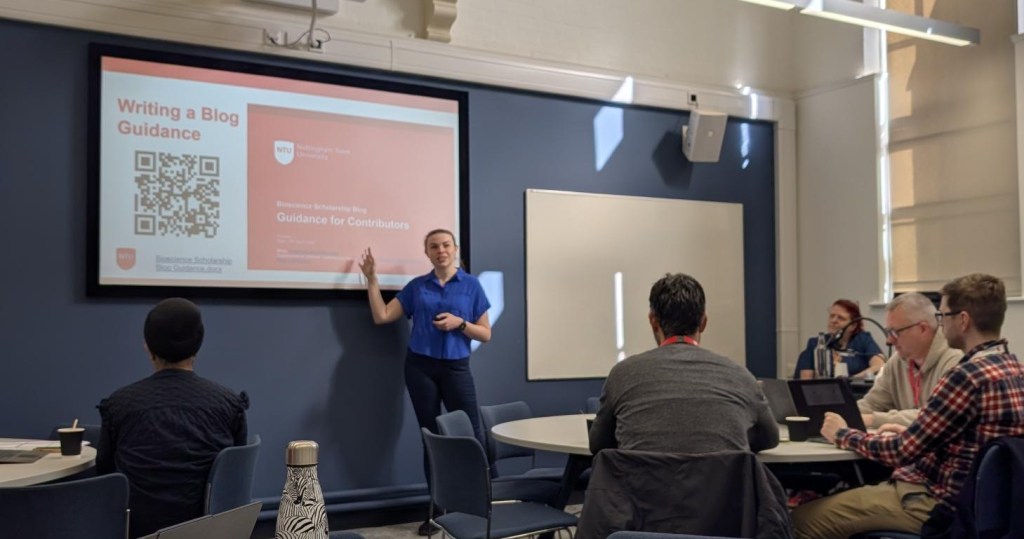
The Biosciences Scholarship Away Day brought together NTU colleagues from across the biosciences community to share ideas, develop scholarship projects, and explore approaches to pedagogic research. Hosted by the Scholarship Research Centre, the day provided space for staff to reflect on their current scholarship activity, consider future directions, and engage with practical sessions on project design, ethics, qualitative analysis, and dissemination. This blog post captures some of the key sessions and reflections from the day.
Developing a Theory of Change
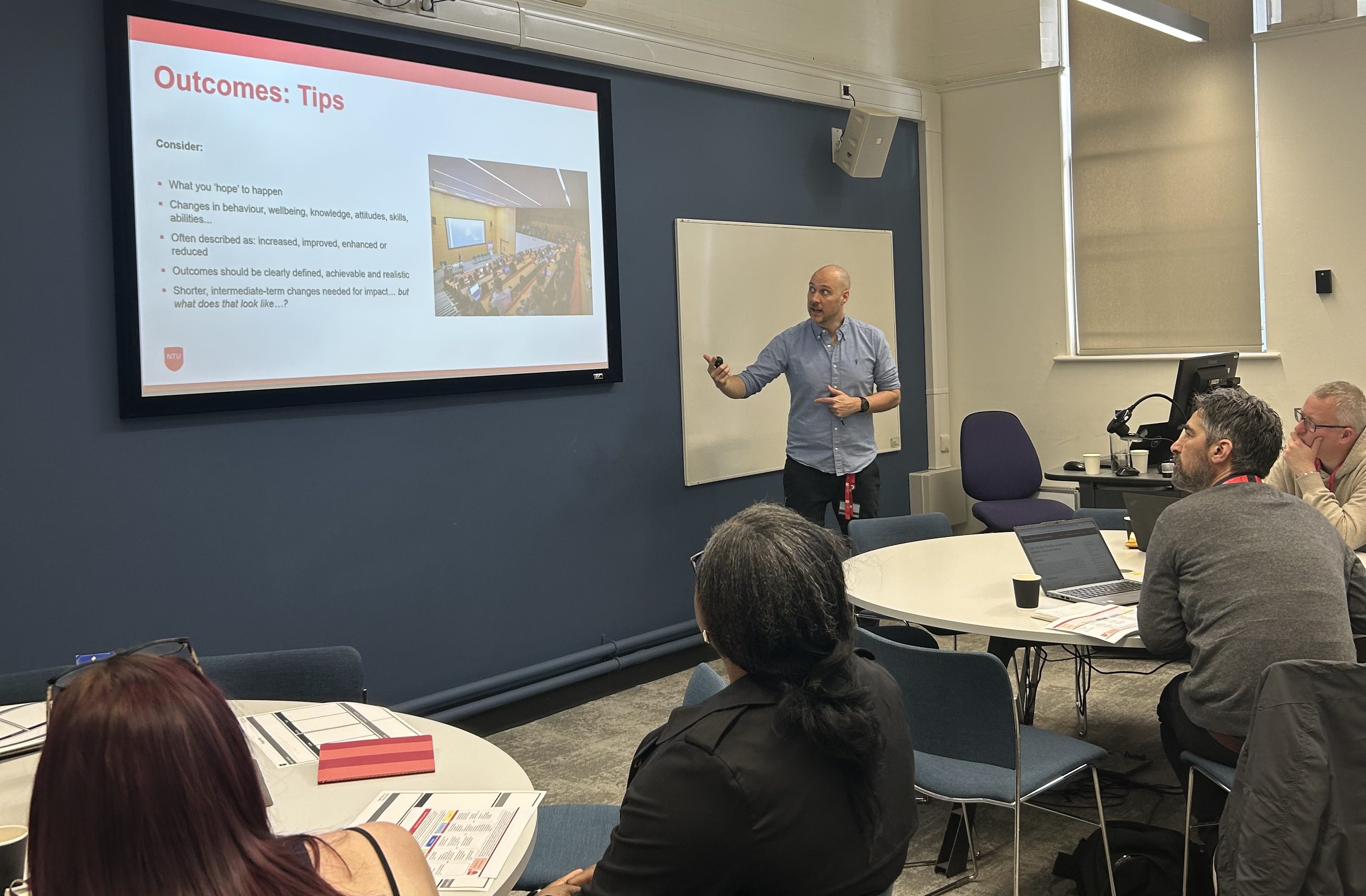
A key highlight of the Biosciences Scholarship Away Day was the Theory of Change (ToC) workshop delivered by Peter Crowson from CenSCE. This session provided colleagues with a highly interactive and hands-on opportunity to explore how to design and articulate impactful scholarship projects. Through collaborative activities, participants engaged with ToC templates, including Active Collaborative Learning (ACL) and surfacing hidden voices through decolonising the curriculum. These examples helped staff reflect critically on how their own projects mapped to ToC criteria.
A particularly valuable aspect of the session was the use of TASO’s Theory of Change builder tool, which supported colleagues in structuring their ideas and mapping intended outcomes. This resource enabled participants to connect their project aims with activities and impact, strengthening both planning and evaluation processes. The workshop created space for meaningful discussion, encouraging staff to think strategically about their scholarship initiatives.
Overall, the session was well received for its practical approach and relevance. It empowered colleagues to actively develop their own Theory of Change in a supportive environment, enhancing confidence and clarity in their project design. The engagement and enthusiasm demonstrated during this session highlighted its value for ongoing scholarship development.
Guest Speaker Insight: Louise Robson
The away day also featured an inspiring contribution from our guest speaker, Louise Robson from the University of Sheffield. Louise shared her personal scholarship journey, offering valuable insights into developing impactful projects and navigating promotion criteria within higher education. Her talk was particularly engaging due to its specificity and the clear connections she drew between pedagogic practice, scholarship outputs, and career progression.
Using her work on lecture capture as an example, Louise demonstrated how scholarship can evolve from teaching practice into meaningful research and institutional impact. This real-world perspective resonated strongly with colleagues, many of whom reflected on their own barriers to engagement with scholarship. One key theme that emerged was the challenge of establishing an external and international presence, which Louise helped to normalise as a common sector-wide issue.
Importantly, Louise encouraged staff to actively develop their professional profiles, particularly through platforms such as LinkedIn, to increase visibility and external engagement. Her advice emphasised the importance of not underestimating the value of sharing one’s work and expertise more widely.
Louise’s session was both motivating and relatable, leaving colleagues feeling reassured, supported, and more confident about their scholarship journeys.
Hands-on Project Development Activity
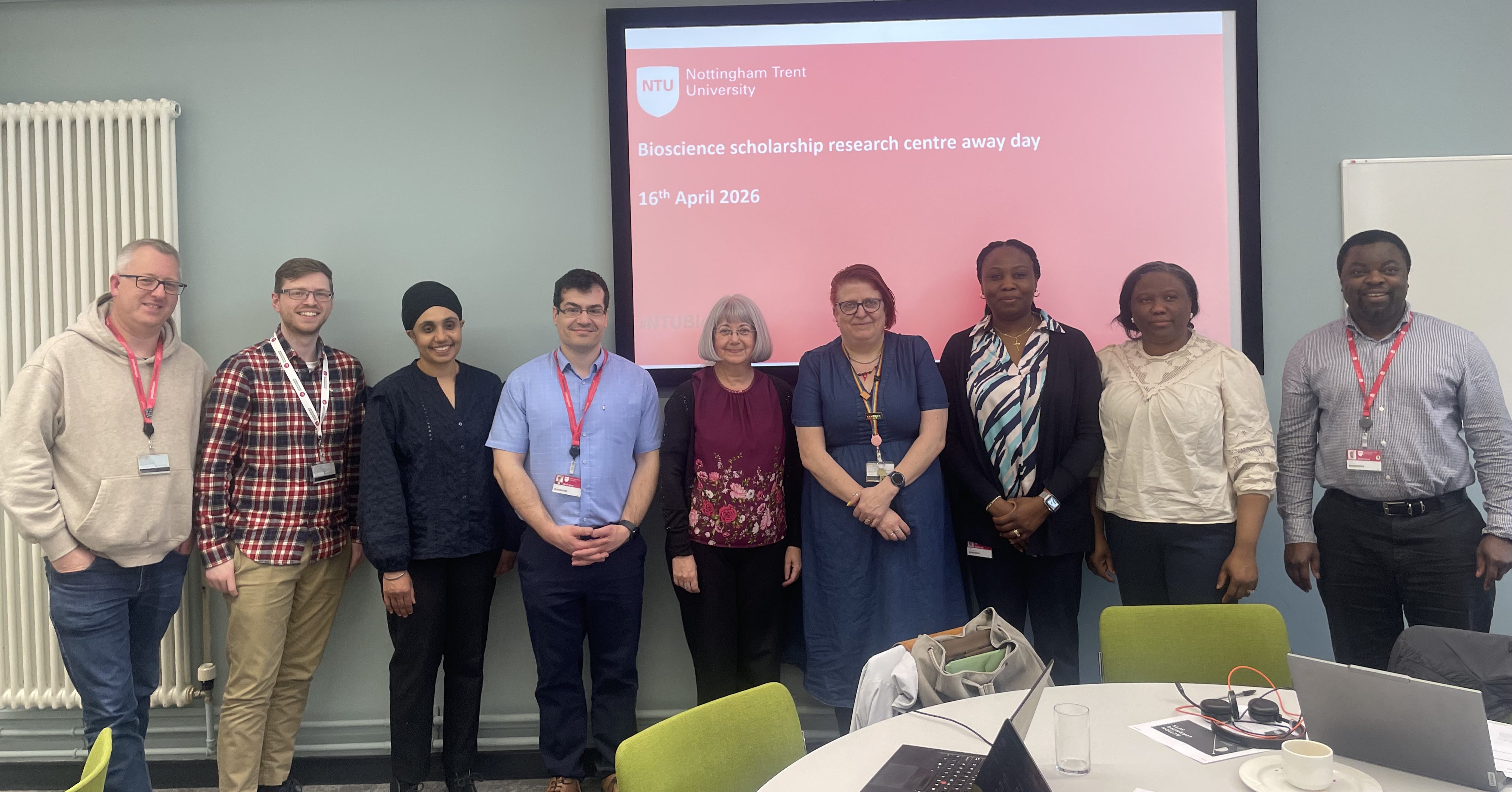
To facilitate project collaboration among colleagues, a speed networking activity was facilitated by scholarship research centre theme leads Anastasios, Bunmi, and Ishwinder. Using the principles of Action Learning Sets, colleagues worked in small groups, taking turns to share a current project they were working on, or thinking of working on. The group’s role was to ask the colleague on the ‘warm seat’ questions to provoke deeper thinking and help identify feasible next steps in the project development. Some of the questions included: ‘What is the core of the problem for you?’, ‘What is stopping you from taking the next step?’, and ‘What assumptions are you making about your collaborators?’ This created a safe space for participants to deconstruct projects, question assumptions, and identify opportunities for collaboration.
Exploring Ethics, Research Design, and Qualitative Analysis
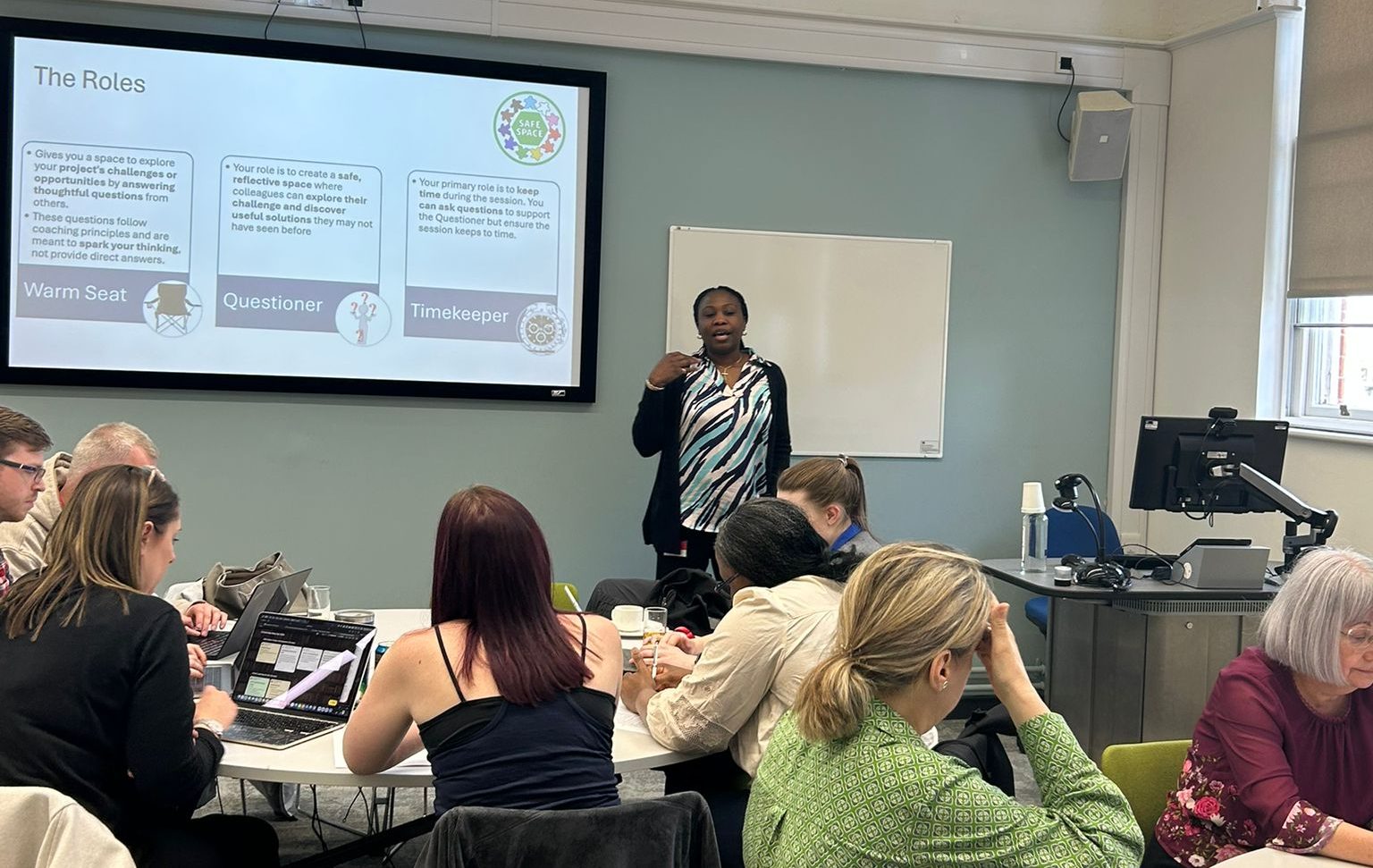
Following on from the project collaboration activity, Sarah Rayment, Director of the Scholarship Research Centre, delivered training on successful ethics applications, research design, and qualitative analysis for pedagogical research. Terms such as confidential, pseudonymised, and anonymised were clarified, and approaches to risk assessment and data management plans were discussed.
In relation to project design and the formulation of research questions, emphasis was placed on key aspects including the purpose of the research (why?), the aim to be accomplished (what?), the participants involved and methods to be used (how?), and the evaluation of success. Depending on the research questions, methods could include surveys, interviews, or focus groups. Approaches to qualitative analysis, such as content and thematic analysis, were discussed, as well as the use of qualitative data analysis software such as NVivo.
Reflections on the Day
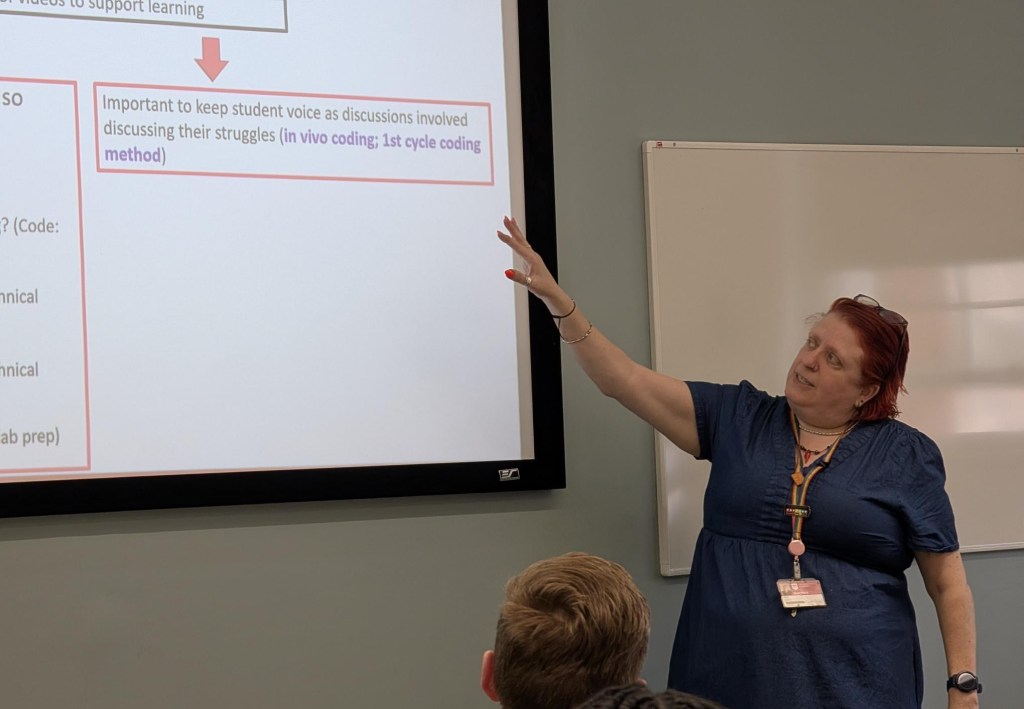
Reflecting on their experience of the day, colleagues valued the varied aspects of scholarship research covered, the opportunity to discuss and develop project ideas, and the useful tips on ethics, project design, and dissemination. They were able to identify aspects for immediate action within their scholarship research and suggested developmental areas for the next training event.
As a scholarship centre, we are very pleased to have successfully hosted the second edition of the scholarship away day, and we look forward to next year’s event.

Ishwinder Kaur
Senior Lecturer in Bioscience
Acting Authentic and Engaging Teaching and Learning Theme Lead





 Bioscience Scholarship Research at NTU
Leave a comment